

King Tides and El Niño: How to Protect Low-Lying Marin and San Francisco Yards This Winter
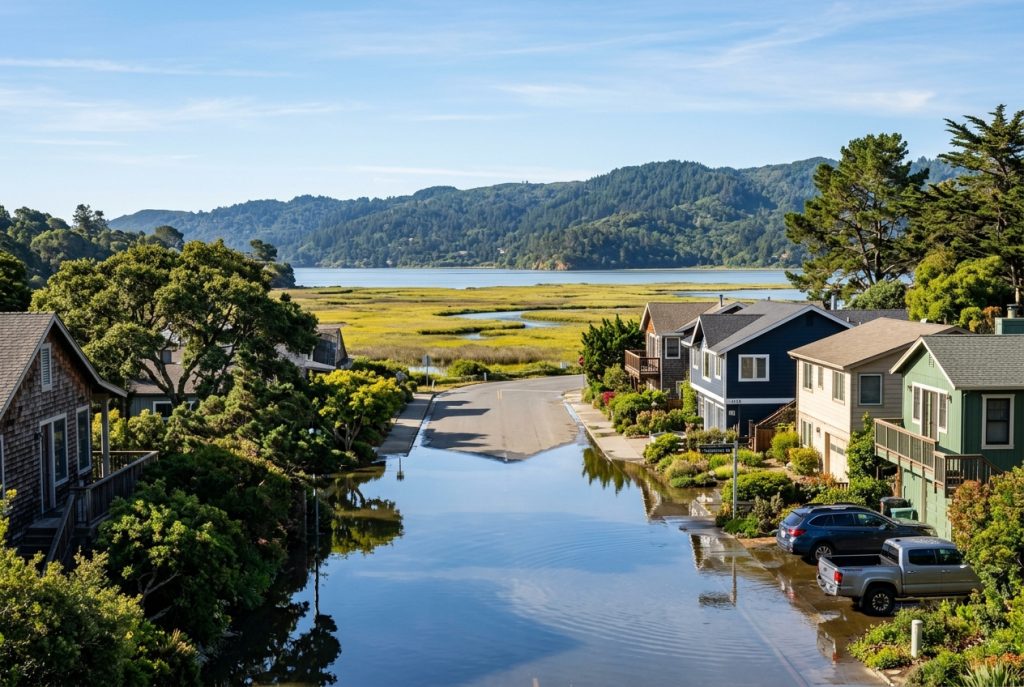
On November 13, parts of Marin flooded under clear skies. There was no storm — just a high tide pushed higher by El Niño. “We have already seen flooding this season and that occurred with blue skies and no rain,” Marin County Executive Derek Johnson said (County of Marin).
That was before the king tides. The highest tides of the year arrive this winter on top of a potentially record-strength El Niño, and the combination could bring the highest water many bayside homes in Marin and San Francisco have seen. Here’s what to expect, where it floods, and how to protect your yard and garden.
Thanksgiving week update (Nov. 22): NOAA predicts king tides above seven feet in Marin, peaking at 10 a.m. Tuesday, Nov. 24; 10:49 a.m. Wednesday, Nov. 25; and 11:38 a.m. Thanksgiving Day. Rain is forecast Nov. 23–26, which could make flooding worse and last longer. Marin County asks residents to avoid nonessential travel from 9 a.m. to 4 p.m. Tuesday through Thursday (County of Marin). The National Weather Service expects to upgrade its Coastal Flood Advisory to a Coastal Flood Warning from Monday through Thursday (KRON), and the entire Tiburon Peninsula is under an evacuation advisory (San Francisco Chronicle).
What Are King Tides — and Why This Winter Is Different
A king tide is a popular, non-scientific term for an exceptionally high tide (NOAA). They happen every winter, on a predictable schedule, when the sun and moon line up.
This year El Niño adds water on top. NOAA’s November 12 update says El Niño is still strengthening, with a strong-to-very-strong event likely through January–March 2027 (NOAA Climate Prediction Center). Warm water expands, and that lifts the whole Pacific. On November 13, the National Weather Service forecast a high tide about 1.5 feet above the predicted 5.5 feet, and attributed the difference partly to El Niño. Forecasters expect elevated water levels to last through the winter (KQED).
Scripps oceanographer Sophia Merrifield told Marin County the mix of El Niño and king tides could bring “likely the highest sea levels ever recorded on the California coast associated with this event” (County of Marin).
2026–27 King Tide Dates for Marin and San Francisco
The California Coastal Commission lists this winter’s king tides as (California King Tides Project):
- November 24–26, 2026 (Thanksgiving week)
- December 23–25, 2026 — Northern California may also see December 22
- January 21–22, 2027 — Northern California may also see January 20 and/or 23
The peaks fall in the late morning. Tidal flooding can start up to two hours before each peak and last more than two hours after (County of Marin). If a storm lands on a king tide day, rain has nowhere to drain, and that’s when the worst flooding happens.
Where King Tides Flood in Marin and San Francisco
Marin County lists these areas as having flooded in past king tides (ABC7, County of Marin):
- Lucky Drive in Larkspur and Corte Madera
- Shoreline Highway and Manzanita near Mill Valley
- San Rafael’s Canal neighborhood and Santa Venetia
- North San Pedro Road through China Camp
- Greenwood Cove Drive in Tiburon
- Coastal communities and parts of Ross Valley
In San Francisco, the risk is highest on low ground near the Bay shoreline and along creeks that drain to the Bay. If your street floods from storm drains backing up at high tide, the water is coming from the Bay, not the sky.
How King Tide Flooding Damages Yards and Gardens
Tidal flooding is different from a rainstorm in three ways:
- It’s salt water. Saltwater flooding can be more damaging to landscape plants than freshwater flooding (Clemson Cooperative Extension). Lawns, vegetables and most ornamentals don’t tolerate it.
- It comes up from below. At high tide, water backs up through storm drains and pushes up through already-wet soil. French drains and rain gardens near the shoreline can fill from underneath.
- It repeats. King tides come in clusters of days, then return a month later. Soil never fully drains between them.
Before the Next King Tide: Yard Prep Checklist
1. Know your tide times
Check the predicted high tide for your area before each king tide window, and plan around the late-morning peak. Sign up for AlertMarin for tide, weather and traffic alerts.
2. Clear every drain and outlet
Clear gutters, downspouts, area drains and the storm drain at your curb so rainwater can leave fast between tides (ReadyMarin).
3. Get sandbags before you need them
Marin County has about 73,000 sandbags in inventory this winter, compared with about 5,000 used in a typical year (KION / CBS Bay Area). Find your nearest site on the County sandbag map. San Francisco residents can get free sandbags from SF Public Works. Place them at garage doors and low thresholds, not around plants.
4. Move what salt water would ruin
Move potted plants, bagged soil and compost, fertilizer, garden chemicals and outdoor furniture off low ground and out of the garage floor.
5. Don’t water ahead of a king tide
Turn irrigation off in low-lying zones through the winter. Wet soil fills faster and stays waterlogged longer.
6. Don’t drive or walk through floodwater
For Thanksgiving week, Marin County asked residents to avoid nonessential travel from 9 a.m. to 4 p.m., because roads that are passable in the morning can flood as the tide rises (County of Marin). Expect similar advice in December and January, and check emergency.marincounty.gov before you go out.
After a King Tide Floods Your Garden
- Stay off waterlogged soil. Walking on it compacts the soil and damages roots (UC Marin Master Gardeners).
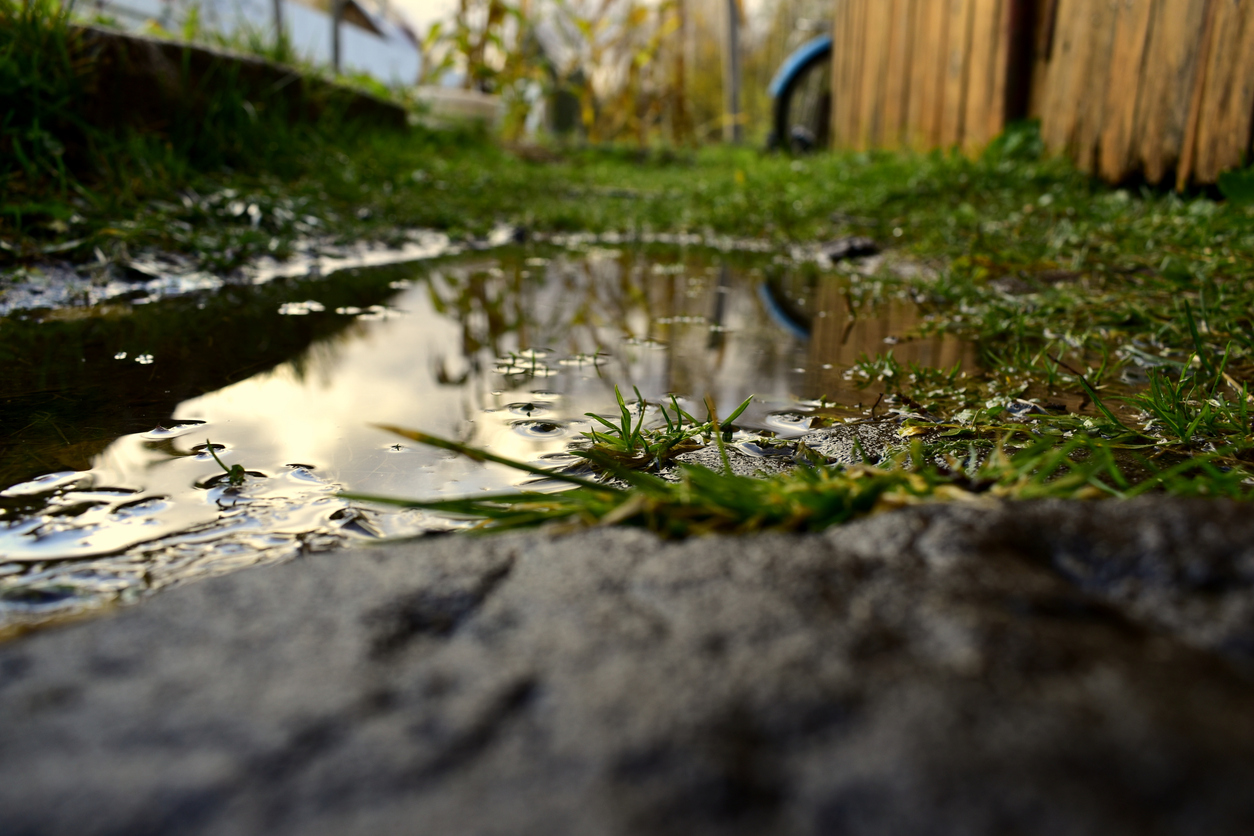
- Flush out the salt. Once the water recedes, soak the area with fresh water. About six inches of irrigation flushes 50–70% of the sodium from soil; apply it about one inch at a time (Clemson Cooperative Extension). Winter rain helps, but a dry spell after a tide means you’ll need to water.
- Be patient before pruning. Most landscape plants survive being underwater for about a week. Remove only clearly dead or broken limbs; plants that drop leaves may still have live buds (UC Marin Master Gardeners).
- Toss edibles that touched floodwater (UC Marin Master Gardeners).
- Expect slow recovery in heavy clay. Poorly drained soil can take years to recover from saltwater flooding (Clemson Cooperative Extension).
Long-Term Fixes for Bayside Properties
If your yard floods every winter, it’s time to design for it instead of repairing it each spring.
- Raise the grade where it matters. Regrade so the house, garage and main paths sit above the low spots, and give the water a place to collect that isn’t the foundation.
- Raised planting beds. Lift vegetables and ornamentals above the saltwater line.
- Replace salt-sensitive lawn in the lowest areas with plants that handle brackish conditions.
- Stop backflow. Ask about backflow preventers on drain lines so the Bay can’t push up through your drains. San Francisco properties that flood from the street or sewer backups may qualify for the SFPUC Floodwater Management Grant.
- Retaining walls with drainage where a slope or terrace meets low ground.
Salt-tolerant native plants for low spots near the Bay
The San Francisco Bay Conservation and Development Commission’s shoreline planting guide recommends natives like these (BCDC):
| Plant | Botanical name | Where it fits |
|---|---|---|
| Coyote brush | Baccharis pilularis var. consanguinea | Tolerates salt spray and poor soils; tough shrub for the upper yard |
| Alkali heath | Frankenia salina | Low groundcover for clay or saline soils |
| Saltgrass | Distichlis spicata | Brackish and high-marsh zones; a lawn substitute for low spots |
| Pacific gumplant | Grindelia stricta var. angustifolia | Upper edges of salt marsh; yellow summer flowers |
| Marsh baccharis | Baccharis douglasii | Tolerates salt spray and alkaline soils |
| Pickleweed | Sarcocornia pacifica | Very salt tolerant; only for the wettest, lowest spots |
FYGN designs and builds these fixes throughout San Francisco and Marin. See our installation services and Super El Niño yard prep checklist.
King Tides FAQ
When are the king tides in Marin this winter?
November 24–26 and December 23–25, 2026, and January 21–22, 2027. Northern California may also see high tides on December 22 and January 20 and 23.
What time do king tides flood?
The peaks fall in the late morning. Flooding can start up to two hours before the peak and last more than two hours after.
Will salt water kill my plants?
Some, yes. Lawns and most vegetables are the most sensitive. Flush the soil with fresh water after the tide recedes and wait before removing plants; many recover.
What plants can handle king tide flooding?
Salt-tolerant Bay natives such as saltgrass, alkali heath, Pacific gumplant and coyote brush.
Get Your Bayside Yard Ready
FYGN has served San Francisco and Marin since 2001. If king tides are flooding your yard, we’ll walk the property, show you where the water comes in, and give you a plan — from raised beds and salt-tolerant planting to regrading and drainage. FYGN is a licensed C-27 landscape contractor (License #859766).
Call (415) 595-0227 or contact us to schedule a site visit.
Discover more from FYGN | For Your Gardens' Needs
Subscribe to get the latest posts sent to your email.