

Smart Irrigation in San Francisco & Marin: How to Water by Microclimate (and Avoid Wasteful Runoff)
If you live in San Francisco, you already know the truth: you can leave the Sunset in a hoodie and arrive in the Mission in a t-shirt. That same fog/sun split is happening in your garden too.
That’s why “set it and forget it” watering is one of the fastest ways to end up with runoff, stressed plants, fungus issues, or surprise die-off—especially across SF and Marin County’s microclimates.
Here’s a practical guide to smart irrigation: watering that matches your microclimate, supports drought-tolerant landscapes, and hydrates gardens without wasteful runoff.
Why watering “the same everywhere” doesn’t work in the Bay Area
San Francisco alone can swing dramatically in temperature and exposure across neighborhoods. Fog-heavy areas stay cooler and often need less watering. Sunny pockets dry out faster and may need deeper, less frequent watering to support roots.
A smart irrigation approach accounts for:
- Fog vs sun exposure
- Wind (it dries plants fast)
- Slope (water moves downhill—often too quickly)
- Soil type (sand drains fast; clay holds water and can suffocate roots)
- Plant type (native/drought-tolerant vs thirstier ornamentals)
- Seasonal shifts (winter rain, spring transitions, summer fog patterns)
The #1 goal: deep roots, not daily sprinkling
If you want a landscape that can handle drought cycles, the goal is:
- Water less often
- Water more deeply
- Reduce evaporation and runoff
- Adjust by zone
Shallow, frequent watering keeps roots near the surface, where plants become dependent and fragile. Deep watering trains roots downward, making your garden more resilient.
Drip irrigation vs sprinklers: what’s best?
Drip irrigation (often ideal for beds)
Best for: shrubs, perennials, natives, hedges, raised beds
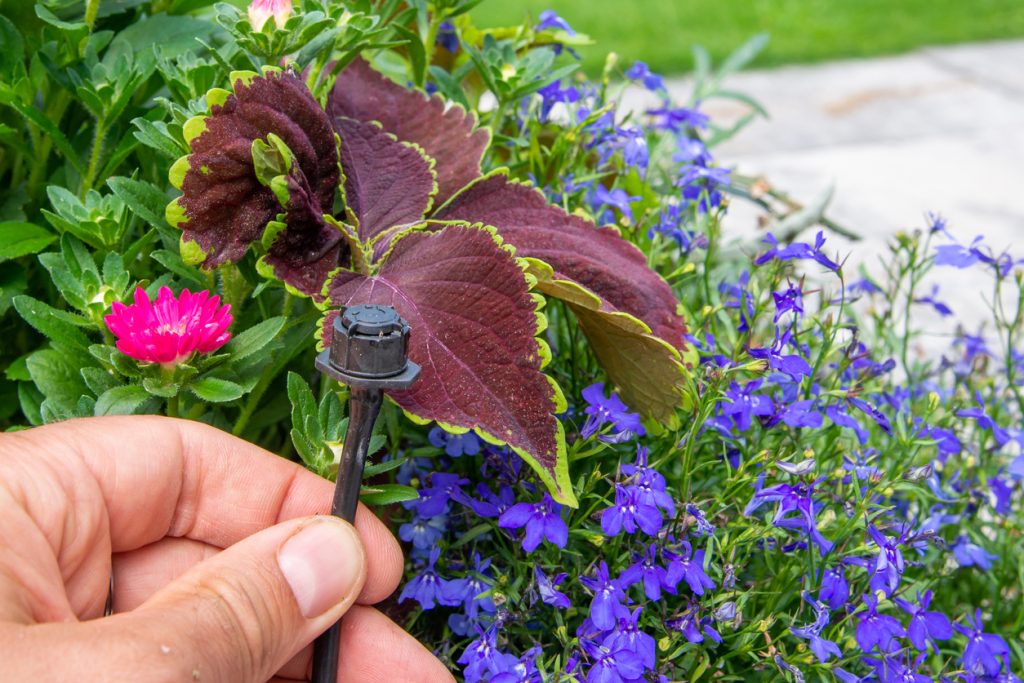
Why it works: delivers water slowly at the root zone with minimal evaporation
Watch-outs: clogged emitters, broken lines, poor layout
Sprinklers (use thoughtfully)
Best for: lawns (if you keep one), certain groundcovers
Watch-outs: wind drift, overspray onto hardscape, fungal issues if watering late
Many properties benefit from a hybrid system: drip for planting beds + targeted sprinklers where appropriate.
How to stop runoff (and keep water in the garden where it belongs)
Runoff isn’t just “wasted water.” It can carry soil and nutrients away, create slippery hardscape, and contribute to unhealthy saturation patterns.
Runoff fixes that work well in SF/Marin:
- Convert problem slopes to drip + soil-building mulch
- Break watering into short cycles (cycle-and-soak) so water absorbs instead of racing downhill
- Improve soil structure with compost (better infiltration)
- Add planting and grading features that slow and hold water (when appropriate)
Set up irrigation zones based on microclimate + plant needs
A smart system isn’t one schedule for the whole yard. It’s zones that match real conditions.
Common zones we see:
- Foggy/shaded bed zone (lower demand)
- Sunny/reflected-heat zone (higher demand)
- New plantings (needs consistent support during establishment)
- Mature drought-tolerant plants (often needs less than people think)
- Slope zone (cycle-and-soak to prevent runoff)
If your current setup has everything on one valve, you may be fighting your own system.
A simple “smart irrigation” checklist you can do this month
- Check your controller settings
If you haven’t updated it seasonally, it’s probably overwatering something. - Inspect for leaks
Look for mushy patches, unusually green spots, or water pooling at heads/valves. - Test drip emitters
Clogs are common. One clogged emitter can stress a plant for months. - Adjust watering time
Early morning is usually best. Evening watering can increase disease pressure. - Mulch the beds
Mulch reduces evaporation and helps irrigation do its job.
Establishment watering: the most misunderstood part of drought-tolerant landscapes
Drought-tolerant does not mean “no water ever,” especially in the first year.
A better expectation:
- Year 1: consistent support while roots establish
- Year 2: taper watering as plants strengthen
- Year 3+: many plants can thrive with minimal supplemental irrigation (microclimate dependent)
This is how you build a garden that can handle drought cycles without constant replacement.
Non-toxic landscapes need smart watering too
Overwatered landscapes invite pests and disease. Healthy, appropriately watered plants are naturally more resilient—supporting FYGN’s approach of regenerative design, native selection, and non-toxic environments.
Good watering supports:
- Stronger plants
- Better soil biology
- Fewer pest outbreaks
- Less fertilizer dependency
When to call a pro for irrigation management
Consider professional support if:
- You see recurring runoff or pooling
- Plants are thriving in one area and struggling in another
- Your controller settings feel confusing or random
- You’re converting to drought-tolerant/native planting
- You want a system designed around efficiency and long-term care
A thoughtful irrigation tune-up can save water, prevent damage, and dramatically improve how a garden feels.
FYGN provides irrigation management, drought-tolerant landscape support, and ongoing maintenance for homes in San Francisco and Marin County—with an emphasis on efficiency, beauty, and bay-friendly methods.
People Also Ask
- What is smart irrigation in the Bay Area?
It’s watering by zone (sun/fog/slope/plant type), using deep, efficient cycles that prevent runoff and support healthy roots. - Is drip irrigation better than sprinklers?
Often yes for planting beds—drip targets roots with less evaporation, but it needs proper layout and maintenance. - How do I stop water from running off my slope?
Use cycle-and-soak scheduling, drip irrigation, mulch/compost to improve infiltration, and erosion-control strategies where needed. - How often should I water drought-tolerant plants?
It depends on microclimate and establishment stage. New plantings need regular support in year one, then taper over time. - Why are some plants thriving while others struggle on the same schedule?
Microclimates, soil type, and exposure vary—one schedule for the whole yard usually overwaters some zones and underwater others. - Should I change irrigation settings in winter?
Yes—rain often reduces the need, but you still want to check for leaks and ensure systems aren’t watering unnecessarily. - What are signs my irrigation system needs a tune-up?
Pooling water, dry patches, uneven growth, fungus issues, or a controller schedule that hasn’t been updated seasonally. - Can smart irrigation reduce pests and disease?
Yes—overwatering stresses plants and encourages disease; balanced watering improves resilience and supports non-toxic garden care.
Discover more from FYGN | For Your Gardens' Needs
Subscribe to get the latest posts sent to your email.