


Winter Storms Reveal Everything: A Simple SF and Marin Drainage Checklist (and Fixes That Last)
January in San Francisco and Marin is when your landscape stops pretending. A summer yard can look perfectly fine while quietly failing underneath: compacted soil, hidden low spots, and drainage paths that only show up when the ground saturates. Winter rains make those patterns obvious.
After a few storm events, most properties reveal the same clues: where water pools, where soil erodes, where paths turn to mud, and where roof runoff concentrates in one place. The upside is that once you can see the problem, you can usually fix it with upgrades that improve both function and long-term landscape health.
Use the guide below to assess drainage without guessing, then choose a solution that matches what your yard is showing you.
The 15-minute post-storm walk
Do this after a real rain, ideally while the ground is still wet or within 24 hours of a heavy storm. Take quick photos and note where issues repeat.
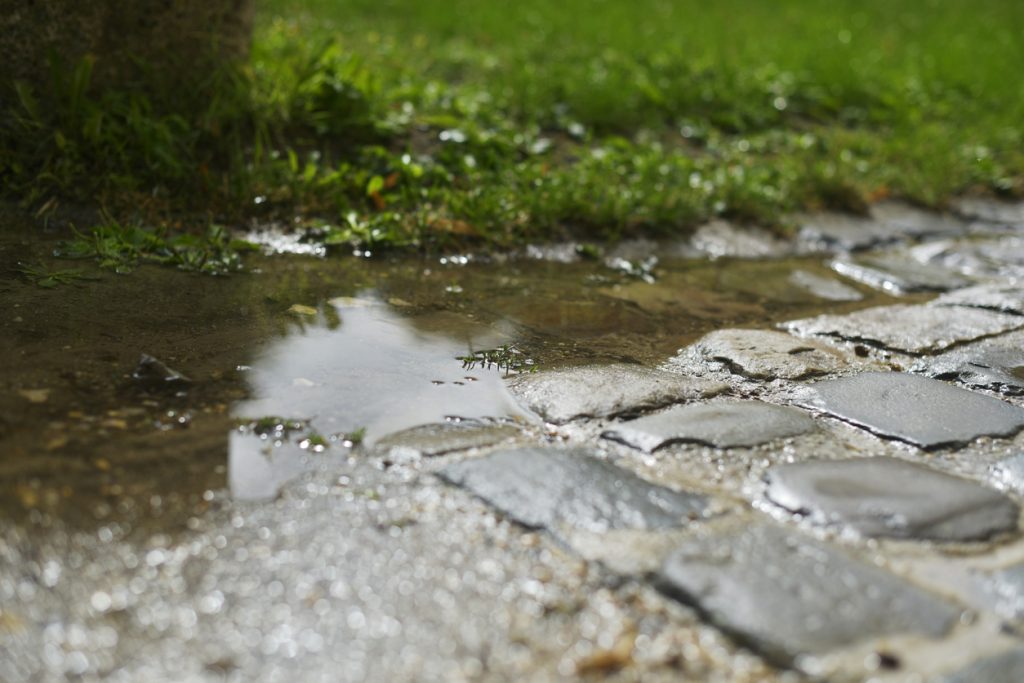
- Pooling water that sits longer than 24 hours – Some puddling during active rain is normal. Water that lingers into the next day, especially near structures, paths, or lawn areas, usually points to grading or infiltration problems. Look for recurring ponds, spongy turf that never firms up, and low areas that stay saturated.
- Runoff paths forming through beds – Watch for water carving channels through mulch or soil, especially on slopes. If mulch migrates downhill, roots become exposed, or bare soil appears in strips after storms, runoff is moving too fast and needs to be slowed or redirected.
- Erosion and slumping on slopes – Hillside gardens in both Marin and parts of San Francisco can experience subtle slope movement when soils saturate. Cracking soil, leaning plants or posts, and muddy deposits at the base of a slope are signs that water is destabilizing the site.
- Downspout splash zones – Many drainage problems start with roof runoff dropping into the same place storm after storm. If you see a crater beneath a downspout, constant saturation near a foundation, or water crossing a walkway, treat the downspout as a primary suspect.
- Hardscape puddling and poor pitch – If water collects on patios, driveways, or paths, it is usually a grading or pitch issue. Areas that repeatedly grow algae, puddles that appear in the same spots, or water that drains toward the house are signs that the surface is not shedding water correctly.
What these symptoms usually mean
Persistent sogginess often indicates compacted soil, a low spot created by settling, clay-heavy soil that holds water, or roof runoff concentrating in one area. Mulch washing away usually means runoff is moving too fast, or that a bed needs a different surface strategy, terracing, or deeper root structure to hold soil in place. Muddy paths often mean you are walking where water naturally wants to flow, and the route needs a defined base and drainage.
Smart fixes that are popular right now in SF and Marin
Permeable pavers
Permeable paving creates a clean, usable surface while allowing rainwater to soak through rather than run off. It is well suited for muddy walkways, side yards with poor drainage, patios that puddle, and some driveway applications. The system relies on a properly built gravel base that stores water temporarily while it infiltrates into soil below, or routes to a controlled drainage layer when needed.
Rain gardens
Rain gardens are shallow planted basins designed to catch, slow, and absorb stormwater. They work best in low areas that already collect water, downspout discharge zones, and the base of slopes where runoff gathers. A rain garden succeeds when it is correctly shaped, uses soils that infiltrate (often amended), and includes plants that tolerate both wet periods and dry periods. Done well, it looks like an intentional, lush planting bed while doing serious drainage work.
Infiltration trenches
An infiltration trench is a narrow trench filled with clean drain rock, often wrapped with fabric, designed to capture water and let it infiltrate slowly. This is a high-impact option when you want drainage improvements without visible infrastructure. It is especially useful for side yards, along patios or walkways, and for managing roof runoff when surface solutions are limited.

Other high-value drainage upgrades
Regrading
Sometimes the most effective fix is not a drain, but a small change in slope. Minor regrading can reduce pooling, protect foundations, and keep planting areas from staying saturated.
Downspout reroutes and dispersion
Instead of dumping roof water into one spot, downspouts can be extended, dispersed into safer areas, or directed into a rain garden or infiltration system when appropriate.
Soil rebuilding
Compacted soil is one of the biggest reasons winter gardens stay soggy. Aeration, compost topdressing, and consistent mulching can improve infiltration over time and reduce runoff.
What to avoid
Avoid piling more mulch into a pooling area and hoping it solves drainage, because it often creates a saturated layer that suffocates plants. Avoid directing water toward the house simply to get it off a path. Avoid installing drainage without a plan for where water will go during heavy storms. And avoid ignoring persistent saturation near foundations, because it can become a structural issue, not just a landscaping inconvenience.

When to call a pro
It is worth getting experienced eyes on the site if water sits near your foundation or crawl space, erosion worsens season after season, you see cracking or slumping on slopes, drainage interferes with access routes, or you are considering major upgrades like pavers, regrading, or a rain garden. Ask for a drainage and grading assessment and a plan that clearly explains where the water will go in heavy storms, not just average rain.
Conclusion
Winter storms are not just inconvenient. They provide information. A simple post-storm walk shows you how water actually moves across your property, and the best fixes are often integrated and attractive: permeable paving, rain gardens, infiltration trenches, and thoughtful grading changes that make the yard work with the weather instead of fighting it.
Discover more from FYGN | For Your Gardens' Needs
Subscribe to get the latest posts sent to your email.